Jenriv Serif Font for Web Design Projects
I was working on a boutique online store layout last week when I stumbled upon Jenriv. It was the kind of moment that makes you pause—when the right font just clicks into place. As a web designer, I've tested countless typefaces, but Jenriv stood out with its elegant serif style and modern balance. It's not just a font; it's a design asset that adds character without overwhelming the user experience.
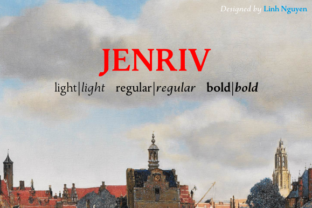
Jenriv is a distinct, elegant serif font that blends traditional influences into a contemporary aesthetic. Its well balanced Latin details contain distinctive contrasts, making it visually appealing while maintaining readability. This combination makes it perfect for digital projects where typography needs to feel both refined and approachable.
Visual Personality and Digital Appeal
What caught my attention about Jenriv was how it carries a sense of craftsmanship. The serifs are subtle yet deliberate, giving it a handcrafted feel that's often missing in digital typefaces. It has a warm, inviting mood that works well for creative industries like art, fashion, or lifestyle brands. It feels premium without being too formal, which is ideal for websites that want to strike a balance between professionalism and personality.
The visual characteristics of Jenriv include strong, clean lines and a consistent stroke contrast that enhances legibility. These features make it suitable for use across various screen sizes, from mobile devices to large monitors. Whether placed over an image banner or used as a hero section headline, it maintains its elegance without losing clarity.
Practical Use in Web Layouts
I tested Jenriv on a few different layouts to see how it performed. In a hero section, it worked beautifully over a full-screen background image. The font's presence didn't overpower the visuals, but instead, it added a touch of sophistication that elevated the overall design. For a product landing page, I used it for the main headline, and it helped draw the eye naturally to the key message.
On mobile screens, Jenriv remained legible even at smaller sizes. It didn't get too condensed or lose its shape, which is crucial for responsive design. When paired with a clean sans serif font for body copy, the contrast helped create a clear visual hierarchy. This pairing made the content more scannable, improving the user experience without sacrificing style.
Jenriv also performed well in call-to-action areas. Used for buttons or short phrases, it added a touch of personality that encouraged interaction. Its decorative nature worked best for accents rather than long paragraphs, making it ideal for headlines, subheadings, and decorative text elements.
Considerations for Web Design
While Jenriv is versatile, it's important to consider its limitations. It's not suited for long body copy or small navigation text due to its decorative nature. Using it for form labels or accessibility-heavy interfaces could reduce readability, especially for users with visual impairments.
For optimal performance, ensure that the font file is optimized for web use. Check if the font includes all necessary styles, alternates, ligatures, and weights. Also, verify that it supports the languages you plan to use and that it comes with commercial licensing if you're using it on client projects, online stores, or brand assets.
Font pairing is another consideration. Jenriv pairs well with simple sans serif fonts for body text, creating a balanced look that's both modern and professional. It can also complement script or handwritten fonts for a more artistic feel, depending on the brand identity you're trying to achieve.
Real-World Examples
One of the most effective uses I found for Jenriv was on a coaching website. Used in the hero section with a soft gradient overlay, it created a welcoming atmosphere that aligned with the brand's tone. Another example was a course sales page, where it was used for section headings, helping to guide the reader through the content smoothly.
For a blog redesign, I used Jenriv for the header and featured post titles. It gave the site a fresh, editorial feel that matched the content's quality. On a promotional landing page, it worked well for the headline and supporting text, reinforcing the brand's visual identity without being distracting.
Overall, Jenriv is a valuable addition to any web designer's toolkit. It brings a unique blend of tradition and modernity that can enhance the visual appeal of a website while maintaining usability. Whether you're designing a portfolio, an online store, or a campaign page, Jenriv offers a stylish yet practical solution that stands out in the digital space.